I. INTRODUCTION
Mobile health (mHealth) applications have become common tools for managing daily well-being, offering functions such as step tracking, medication reminders, and stress monitoring. Yet many users discontinue them within weeks—a phenomenon often called the law of attrition [1]. Recent reviews estimate that nearly half of users abandon mHealth apps early, despite recognizing their potential benefits [2-3]. The real challenge is sustaining meaningful, long-term engagement.
To address this, many designers use gamification, introducing goals, points, or social elements to make self-care more engaging. However, results have been mixed: some interventions improve adherence, while others fail or even reduce motivation [5-6]. Such inconsistencies suggest that effectiveness depends on how gamified features match users’ psychological needs and expectations.
Despite growing interest in gamified mHealth, existing studies have two key limitations. First, gamification is often treated as a monolithic construct, overlooking the distinct psychological roles of different design features (e.g., progression vs. social vs. autonomy-supportive elements). Second, most studies rely either on motivational frameworks (e.g., SDT) or on post-adoption evaluation models (e.g., ECM) in isolation, leaving it unclear how motivational experiences and cognitive evaluations jointly shape continuance intention. Addressing these gaps is critical because without distinguishing how different gamification features work and why they sustain or fail to sustain engagement, designers lack actionable guidance, and theory remains fragmented.
This study draws on self-determination theory (SDT) and the expectation–confirmation model (ECM) to explain these differences. SDT emphasizes the needs for autonomy, competence, and relatedness, which foster intrinsic motivation and sustain voluntary behavior [8-9]. In contrast, ECM focuses on how users evaluate early experiences: when expectations are confirmed, perceived usefulness and satisfaction increase, encouraging continuance [4,14]. Together, the two perspectives describe both the experience of use and the evaluation of value—why users enjoy an app and why they choose to keep it.
Despite their complementarity, few studies have integrated SDT and ECM to examine continued mHealth use. Existing research often treats gamification as a single construct, ignoring the distinct psychological roles of its design elements. To fill this gap, the present study conceptualizes gamification as three feature clusters:
By integrating motivational (SDT) and evaluative (ECM) processes, this research explores how these feature clusters influence users’ continuance intention through the sequential mechanisms of need satisfaction, intrinsic motivation, confirmation, perceived usefulness, and satisfaction. Specifically, it asks:
How do different gamified design features shape sustained use of mHealth applications through the combined effects of SDT and ECM pathways?
To answer this question, a structural equation model (SEM) is tested using data from 574 valid responses. The analysis identifies which features most effectively satisfy psychological needs and confirm perceived value, thereby enhancing satisfaction and continuance intention. The findings aim to provide both theoretical insight and practical guidance for developing mHealth systems that feel meaningful, useful, and worth returning to.
This study makes three primary contributions. Theoretically, it advances gamification research by disaggregating gamified design into three distinct feature clusters—progression/achievement, social, and autonomy-supportive—each linked to a specific psychological need, and integrates SDT and ECM into a dual-path model that captures both motivational and evaluative mechanisms. Methodologically, it provides robust empirical evidence using a large sample (N=574) and rigorous SEM with bootstrapping, offering a replicable framework for future continuance research. Practically, the findings offer designers clear guidance: effective gamification must simultaneously support psychological needs and manage early expectations to sustain long-term engagement.
II. THEORETICAL FRAMEWORK AND HYPOTHESES
Self-Determination Theory explains why people persist in behaviors that feel meaningful and self-endorsed. It identifies three psychological needs—autonomy, competence, and relatedness—as essential sources of intrinsic motivation [8-9]. When these needs are supported, people act out of interest rather than obligation, which sustains long-term engagement.
In the mHealth context, such needs often emerge naturally. A user chooses daily goals (autonomy), receives feedback after progress (competence), or shares results with others (relatedness). Apps that allow users to make choices, visualize their progress, and provide supportive feedback are more likely to encourage continued participation. Empirical studies show that need satisfaction predicts both stronger adherence and more durable behavior change [9-10]. Conversely, controlling feedback or rigid goals can undermine intrinsic motivation.
Gamification can help fulfill these needs through specific design features. Progression and achievement elements make improvement visible, social features encourage supportive contact, and autonomy-supportive design provides flexibility and choice. When users perceive such need satisfaction, they are more likely to enjoy the experience, internalize the goal, and continue using the app. Therefore, this study treats psychological need satisfaction as a key mediator linking gamified features to intrinsic motivation a nd continuance intention.
While SDT focuses on internal motivation, the expectation–confirmation model (ECM) explains post-adoption evaluation. Users enter with expectations; if early experiences meet or exceed them, confirmation occurs. This confirmation enhances perceived usefulness and satisfaction, which in turn strengthen continuance intention [1,14]. In digital health research, perceived usefulness and satisfaction have consistently emerged as the strongest predictors of sustained use [12,14].
Gamified design may indirectly influence these evaluations. Features that provide early feedback or clear progress cues help users recognize benefits sooner, reinforcing confirmation and usefulness. Even when intrinsic motivation is moderate, a well-structured confirmation process can increase satisfaction and long-term retention. Thus, ECM captures the evaluative side of sustained engagement—how users decide that continued use is worthwhile.
The two frameworks complement each other. SDT explains why engagement feels enjoyable; ECM explains why users keep returning. By integrating both, the present study proposes a dual-path model of motivation and evaluation. Gamified features first support autonomy, competence, and relatedness (SDT pathway), fostering intrinsic motivation and satisfaction. In parallel, early confirmation enhances perceived usefulness and satisfaction (ECM pathway). Together, these processes shape continuance intention [1,9,14].
In this model, gamification is divided into three clusters—progression and achievement, social, and autonomy- or immersion-supportive features—each corres-ponding to one of the basic needs. The framework predicts that when these needs are satisfied, intrinsic motivation rises; when expectations are confirmed, perceived usefulness and satisfaction increase; and both pathways converge to sustain use (Fig. 1).
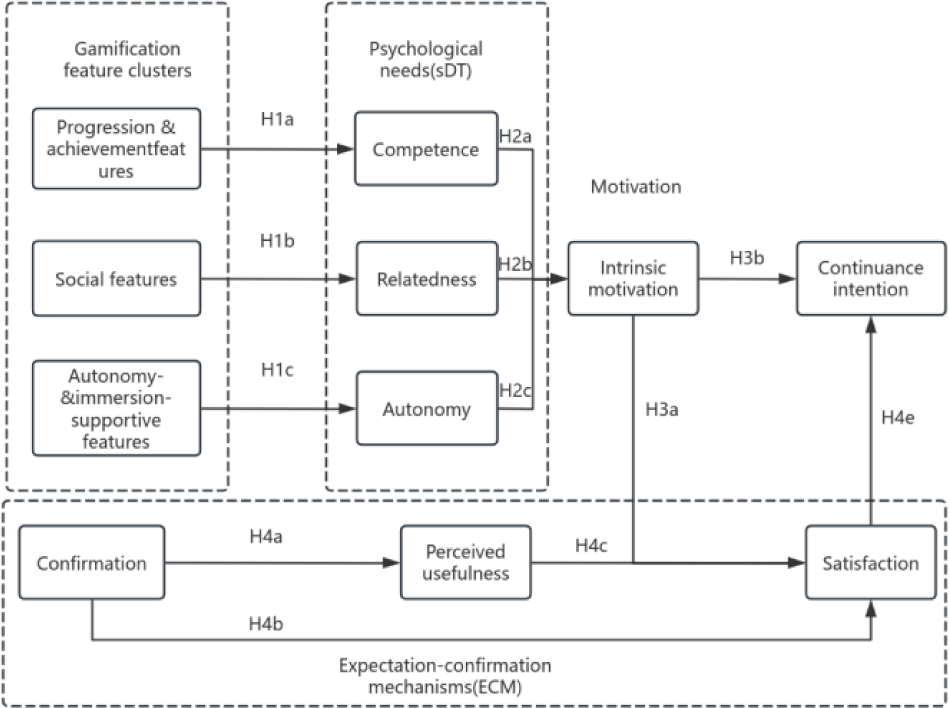
To empirically test this integrated framework, the following hypotheses link gamification feature clusters, psychological needs, motivation, and post-adoption beliefs.
H1. Gamification feature clusters and psychological needs.
H1a. Progression and achievement features are positively associated with competence.
H1b. Social features are positively associated with relatedness.
H1c. Autonomy- and immersion-supportive features are positively associated with autonomy.
H2. Psychological needs and intrinsic motivation.
H2a. Competence positively predicts intrinsic motivation.
H2b. Relatedness positively predicts intrinsic motivation.
H2c. Autonomy positively predicts intrinsic motivation.
H3. Intrinsic motivation and downstream outcomes.
H3a. Intrinsic motivation contributes positively to satisfaction.
H3b. Intrinsic motivation contributes positively to continuance intention.
H4. Expectation–confirmation mechanisms.
H4a. Confirmation positively predicts perceived usefulness.
H4b. Confirmation positively predicts satisfaction.
H4c. Perceived usefulness positively predicts satisfaction.
H4d. Perceived usefulness positively predicts continuance intention.
H4e. Satisfaction positively predicts continuance intention.
H5. Integrated indirect effects.
H5a. Progression and achievement features strengthen conti-nuance intention through a sequential pathway involving competence, intrinsic motivation, and satisfaction.
H5b. Social features strengthen continuance intention through a sequential pathway involving relatedness, intrinsic motivation, and satisfaction.
H5c. Autonomy- and immersion-supportive features strengthen continuance intention through a sequential pathway involving autonomy, intrinsic motivation, and satisfaction.
III. METHODS
This study employed a quantitative, cross-sectional survey design to examine how gamified design features in mHealth applications influence users’ psychological need satisfaction, intrinsic motivation, perceived usefulness, satisfaction, and continuance intention. A structured questionnaire was distributed online via Wenjuanxing, a widely used Chinese survey platform, between May 24 and June 27, 2025. Participants were recruited through two channels: open invitation links shared on social media (WeChat groups, timelines, and direct messages) and the platform’s paid sampling service.
Participation was voluntary, and all respondents were informed of their rights prior to starting the survey. The first page of the questionnaire included plain-language information about the study’s purpose and a consent checkbox. No personally identifying data such as names or contact information were collected. Respondents could withdraw at any point without penalty. Data were stored on a secure, password-protected drive accessible only to the research team.
The study adhered to the ethical standards of the Declaration of Helsinki (2013 revision). As participation posed minimal risk and data were collected anonymously, the research qualified for exemption from full institutional review. Formal IRB approval or exemption documentation will be appended upon receipt from Jeonbuk National University. Similar data collection procedures have been applied in recent mHealth studies [14].
All constructs in Table 1 were assessed with validated multi-item scales that were refined for the mHealth context. Responses were recorded on a five-point Likert scale, where 1 indicated strongly disagree and 5 indicated strongly agree.
Gamification features were assessed through three clusters—progression and achievement, social, and autonomy/ immersion-supportive features—based on prior frameworks of gamified system design [6-7].
Psychological need satisfaction was measured using subscales for autonomy, competence, and relatedness from established SDT research [18-20].
Intrinsic motivation was measured with a four-item short form of the Intrinsic Motivation Inventory adapted to the health context [20].
Confirmation, perceived usefulness, satisfaction, and continuance intention were drawn from the expectation–confirmation literature and information systems models [1,12].
All measurement items were translated and back-translated by bilingual experts following established cross-cultural adaptation procedures to ensure conceptual equivalence.
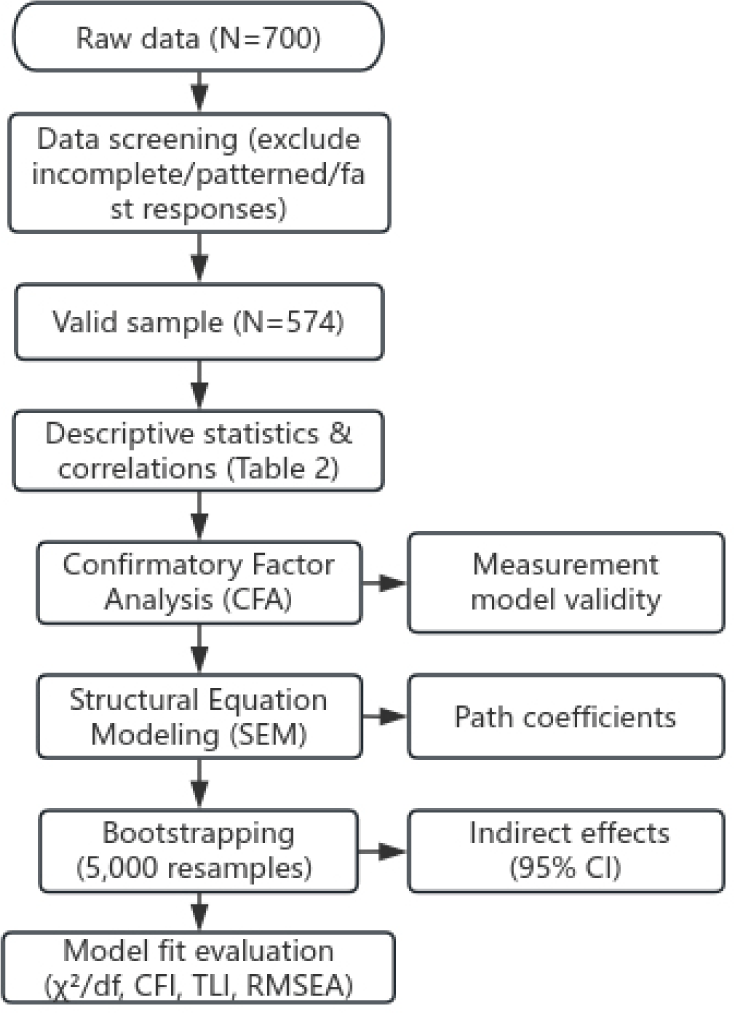
A total of 700 responses were collected, among which 574 valid cases (82%) remained after excluding incomplete, patterned, or excessively fast responses. The final sample included 299 women (52.09%) and 275 men (47.91%), showing a balanced gender distribution.
Participants represented a broad age range: 6.8% were under 18, 15.5% were 18–25, 25.8% were 26–30, 22.3% were 31–40, 17.1% were 41–50, 9.4% were 51–60, and 3.1% were over 60. Educational attainment ranged from middle school to graduate-level degrees, with most participants holding associate or bachelor’s degrees. Occupations included marketing, administration, technology, education, and service industries, reflecting the diversity typical of urban mHealth users.
Table 1 presents the demographic distribution of gender, age, education, occupation, and income.
This heterogeneous sample provides a relevant basis for analyzing patterns of technology acceptance and sustained mHealth engagement, consistent with previous studies in similar contexts [14].
Data were analyzed using SPSS and AMOS. Confirmatory factor analysis (CFA) verified the measurement model, and structural equation modeling (SEM) tested the hypothesized relationships among constructs following standard information systems research protocols [1,14].
Table 2 presents descriptive statistics and bivariate correlations for all study variables.
As shown in Table 3, the measurement model demonstrated acceptable fit (χ2/df=1.776, CFI=0.948, TLI=0.945, RMSEA=0.037).
| Fit index | Criterion | Actual value |
|---|---|---|
| χ2/df | <3 | 1.776 |
| GFI | >0.80 | 0.869 |
| AGFI | >0.80 | 0.857 |
| IFI | >0.90 | 0.948 |
| TLI | >0.90 | 0.945 |
| CFI | >0.90 | 0.948 |
| RMSEA | <0.08 | 0.037 |
Reliability and validity were assessed through composite reliability (CR) and average variance extracted (AVE), with all CR values exceeding 0.70 and AVE values above 0.50, as recommended in prior methodological studies [1]. Discriminant validity was examined using the Fornell–Larcker criterion, where the square root of each construct’s AVE exceeded its inter-construct correlations.
Common method variance was checked through Harman’s single-factor test, yielding a total variance of 32.6%, below the 40% benchmark [14].
Bootstrapping with 5,000 resamples tested indirect effects, and 95% bias-corrected confidence intervals were used to determine mediation significance. Sobel and Delta tests further confirmed the robustness of indirect paths.
Fig. 2 presents a schematic overview of the sequential data analysis procedure.
In summary, the study applied a rigorous quantitative design supported by validated scales, a diverse participant pool, and advanced statistical modeling. The integration of SDT and ECM within the survey framework allows for a comprehensive test of how gamified mHealth features shape both motivational and evaluative mechanisms of continuance. Ethical standards were strictly observed, and data analysis procedures aligned with established methodological conventions [1,6,14]. This methodological rigor ensures both the reliability of findings and their theoretical contribution to understanding sustained engagement in gamified mHealth systems.
IV. RESULTS
Before testing the structural relationships, a confirmatory factor analysis (CFA) was conducted to assess the reliability and validity of all constructs. The results showed a satisfactory overall model fit, with χ2/df=1.776, CFI=0.948, TLI=0.945, and RMSEA=0.037, which are all within recommended thresholds [1,14]. These results suggest that the observed indicators represented their latent variables appropriately.
All standardized factor loadings were between 0.736 and 0.889, exceeding the minimum acceptable level of 0.70. Composite reliability (CR) values ranged from 0.812 to 0.923, indicating good internal consistency, while the average variance extracted (AVE) values ranged from 0.590 to 0.682, surpassing the 0.50 threshold. Cronbach’s alpha values for all constructs were above 0.70, confirming reliability.
Discriminant validity was also satisfactory. The square roots of the AVEs for all constructs were higher than their inter-construct correlations, and all heterotrait–monotrait (HTMT) ratios were below 0.85. Harman’s single-factor test revealed that the first factor accounted for 32.6% of the total variance, which is below the 40% benchmark, suggesting that common method bias was not a serious issue.
The structural equation modeling (SEM) analysis provided strong support for the hypothesized relationships. The integrated SDT–ECM model demonstrated an excellent overall fit (χ2/df=1.776, CFI=0.948, TLI=0.945, RMSEA=0.037), consistent with previous methodological standards [1,14].
In the motivational process derived from SDT, each category of gamified features showed a significant and positive relationship with the psychological need it was designed to support. Progression and achievement features were strongly associated with higher levels of competence satisfaction (β=0.445, p<.001). Social features were significantly related to relatedness satisfaction (β=0.542, p<.001), while autonomy- and immersion-supportive features had a notable influence on autonomy satisfaction (β=0.583, p<.001).
Among the three needs, autonomy satisfaction (β=0.383, p<.001), competence satisfaction (β=0.234, p<.001), and relatedness satisfaction (β=0.403, p<.001) each contributed to stronger intrinsic motivation. Higher intrinsic motivation then led to greater user satisfaction (β=0.356, p<.001) and a stronger intention to continue using mHealth applications (β=0.132, p<.01).
Within the evaluative process based on ECM, confirmation had a significant positive effect on both perceived usefulness (β=0.629, p<.001) and satisfaction (β=0.175, p<.01). Perceived usefulness in turn enhanced satisfaction (β=0.382, p<.001) and also directly reinforced continuance intention (β=0.336, p<.001). Satisfaction itself further contributed to continuance intention (β=0.275, p<.001).
Together, these results indicate that the motivational (SDT) and evaluative (ECM) pathways jointly explain how gamified experiences promote sustained engagement with mHealth applications.
Table 4 presents the standardized path coefficients, standard errors, and significance levels for all tested hypotheses.
To examine the internal mechanisms of the model in greater depth, a bias-corrected bootstrapping procedure with 5,000 resamples was performed. The results revealed several significant indirect relationships that reinforce the proposed theoretical integration.
The strongest indirect effect appeared in the sequence where user confirmation strengthened perceived usefulness, which in turn enhanced continuance intention (ab≈0.21, 95% CI [0.13, 0.30]). A second indirect effect emerged as perceived usefulness improved satisfaction, which then increased continuance intention (ab≈0.11, 95% CI [0.06, 0.17]). Within the motivational dimension, intrinsic motivation was found to raise satisfaction, and the resulting higher satisfaction further promoted continuance intention (ab≈0.10, 95% CI [0.05, 0.16]).
These findings indicate that both the cognitive and motivational routes work together. Confirmation and intrinsic motivation indirectly shape continuance intention through satisfaction, while perceived usefulness plays a bridging role between users’ cognitive evaluation and their behavioral persistence.
The final structural model explained 68% of the variance in satisfaction and 74% of the variance in continuance intention, demonstrating strong explanatory power. The integrated SDT–ECM framework provides a more comprehensive understanding of sustained mHealth use than either theoretical model alone.
The analysis suggests that when gamification features effectively support users’ psychological needs, they enhance intrinsic motivation and overall satisfaction. Simultaneously, confirmation and perceived usefulness strengthen users’ perception of the app’s value. When these motivational and evaluative experiences align—when an app feels engaging and proves genuinely beneficial—users are far more likely to continue using it over time.
Overall, the results provide strong empirical support for the integrated SDT–ECM model. In the motivational pathway, each gamification feature cluster significantly predicted its corresponding psychological need: progression and achievement features influenced competence satisfaction (β=0.445, p<.001), social features shaped relatedness satisfaction (β=0.542, p<.001), and autonomy-supportive features enhanced autonomy satisfaction (β=0.583, p<.001). These psychological needs, in turn, significantly contributed to intrinsic motivation, with relatedness (β=0.403, p<.001) and autonomy (β=0.383, p<.001) showing relatively stronger effects. Intrinsic motivation further contributed to both satisfaction (β=0.356, p<.001) and continuance intention (β=0.132, p<.01).
In the evaluative pathway, confirmation strongly predicted perceived usefulness (β=0.629, p<.001) and also had a direct effect on satisfaction (β=0.175, p<.01). Perceived usefulness emerged as an important predictor of both satisfaction (β=0.382, p<.001) and continuance intention (β=0.336, p<.001), while satisfaction further reinforced continuance intention (β=0.275, p<.001). The integrated model explained 68% of the variance in satisfaction and 74% of the variance in continuance intention, indicating substantial explanatory power.
Bootstrapping analyses further confirmed that both motivational and evaluative processes operate through sequential indirect effects. For example, confirmation influenced continuance intention through perceived usefulness, and intrinsic motivation influenced continuance intention through satisfaction. These results suggest that continuance intention is shaped by a combination of motivational experience and evaluative judgment, rather than by a single pathway.
Taken together, the findings indicate that gamified mHealth applications are more effective in sustaining user engagement when they simultaneously support users’ psychological needs and provide clear perceived value. This highlights the importance of integrating motivational and evaluative mechanisms in explaining continued use.
V. DISCUSSION
The present study sought to explain how gamified design features in mobile health (mHealth) applications promote sustained use by integrating self-determination theory (SDT) and the expectation–confirmation model (ECM). The results demonstrated that both motivational and evaluative processes contribute meaningfully to users’ willingness to continue using mHealth applications.
The SDT pathway confirmed that the satisfaction of basic psychological needs plays a crucial role in sustaining engagement. Features that make progress visible, such as points and levels, effectively enhanced competence satisfaction. Social elements that enabled communication and collaboration strengthened relatedness satisfaction, while autonomy-supportive features allowed users to customize goals and pacing, leading to higher autonomy satisfaction. These needs, when fulfilled simultaneously, fostered intrinsic motivation, which then translated into greater satisfaction and long-term usage intention. This finding aligns with previous SDT-based studies suggesting that need satisfaction encourages internalized motivation rather than external compliance [8-10].
The ECM pathway also performed as expected. Users who felt that their early experiences met or exceeded their initial expectations were more likely to perceive the app as useful and satisfying. Perceived usefulness emerged as one of the strongest determinants of continuance intention, consistent with earlier findings in technology acceptance and post-adoption research [1,14]. Together, the two pathways revealed that users continue to engage with mHealth applications when they simultaneously enjoy the experience and recognize its value. In other words, sustainable engagement arises from the convergence of affective and cognitive reinforcement.
This study makes several theoretical contributions.
First, it extends the application of SDT by operationalizing gamification not as an abstract motivational construct but as a multidimensional set of design features. By distinguishing progression and achievement, social, and autonomy-supportive elements, the study demonstrates that different forms of gamification correspond to different psychological needs. This approach allows for a more nuanced understanding of how gamified systems influence intrinsic motivation.
Second, the research bridges the gap between SDT and ECM, two frameworks that are often examined separately. By integrating motivational and evaluative processes within a single model, this study shows that psychological need satisfaction and cognitive confirmation jointly determine long-term use. This dual-path structure captures the dynamic interaction between how users feel and how they evaluate their experiences—an important conceptual advancement in digital health behavior research.
Third, the study contributes to the broader field of technology continuance by emphasizing the mediating role of intrinsic motivation and satisfaction. Rather than treating satisfaction as a simple outcome, the results highlight it as a critical link that connects internal motivation and cognitive evaluation to behavioral intention. This insight strengthens the explanatory power of existing continuance models and supports a more integrative view of user engagement in health-related technologies.
From a practical standpoint, the findings provide actionable guidance for designers and developers of mHealth applications.
First, the results underline the importance of need-supportive design. Developers should create systems that help users feel competent, autonomous, and socially connected. Simple feedback on progress, adaptive goal setting, and meaningful social features can significantly enhance engagement.
Second, the study highlights the significance of early experience and expectation management. Since confirmation and perceived usefulness play key roles in determining continuance, designers should focus on ensuring that initial user experiences align with or exceed expectations. For example, onboarding processes that clearly communicate benefits and immediate feedback loops that demonstrate usefulness can strengthen users’ sense of value from the beginning.
Third, the findings suggest that satisfaction is not merely a post-use emotion but an ongoing psychological state. Continuous reinforcement of value—through regular updates, evolving challenges, and supportive interactions—can maintain satisfaction and reduce attrition. For practitioners in healthcare and public health promotion, incorporating gamified strategies grounded in SDT and ECM principles can improve adherence to digital interventions and, ultimately, enhance patient outcomes.
Despite its contributions, this study has several limitations that point toward opportunities for future research.
First, although the structural model was built upon theoretically derived causal paths, the cross-sectional design precludes definitive causal inference. The relationships we observed are correlational in nature, and reverse causality or unmeasured third variables cannot be entirely ruled out. Future research should employ longitudinal panel designs or experimental manipulations to establish stronger causal evidence and track how the effects of gamification evolve over time.
Second, the data were collected exclusively from Chinese users, which may limit generalizability to other cultural contexts. Cultural factors—such as attitudes toward health self-management, social comparison norms, and perceptions of gamified rewards—may moderate the observed relationships. Future studies should replicate the proposed model in diverse populations (e.g., North America, Europe, Southeast Asia) and conduct cross-cultural comparisons to validate the model’s universality.
Third, the present study focused on the positive motivational mechanisms of gamification, as theorized by SDT and ECM. However, gamification may also generate negative or ambivalent experiences—such as competition fatigue, social comparison pressure, or privacy concerns—that were not captured in our model. Future research should extend the framework by incorporating moderators (e.g., competitiveness, privacy sensitivity) or additional constructs (e.g., perceived surveillance, social comparison anxiety) to capture a more holistic view of gamified health engagement.
Fourth, although self-reported data were appropriate for capturing subjective perceptions, they may introduce response bias. Combining self-reports with behavioral usage data (such as in-app logs or engagement metrics) would provide a more objective understanding of continuance patterns.
Finally, the current model treated gamification features as three independent clusters, but in practice these features often interact. Future research could explore interaction effects (e.g., whether social features amplify or diminish the effects of achievement features) to better reflect real-world design complexity.
This study set out to explain how gamified design features in mHealth applications promote sustained use by integrating Self-Determination Theory and the Expectation–Confirmation Model. The findings confirm that continuance intention is shaped by two parallel yet interrelated processes: a motivational pathway in which gamification features satisfy basic psychological needs—autonomy, competence, and relatedness—thereby fostering intrinsic motivation and satisfaction; and an evaluative pathway in which confirmation of early expectations enhances perceived usefulness and satisfaction. Together, these pathways explain why users persist with mHealth apps: they continue when an app feels both personally meaningful and objectively valuable.
Theoretically, this study advances continuance research in three ways. First, it moves beyond treating gamification as a monolithic design strategy by empirically linking distinct feature clusters to specific psychological needs, offering a more precise theoretical lens. Second, it demonstrates that SDT and ECM are not competing but complementary, and that their integration captures the full spectrum of user experience—from internalized motivation to cognitive value judgment. Third, by showing that satisfaction serves as a convergence point for both pathways, the model clarifies the psychological mechanism underlying sustained engagement, which has been underexplored in prior mHealth continuance literature.
Practically, the findings provide actionable guidance. For designers, the results suggest that gamification should be need-sensitive rather than feature-heavy: apps should incorporate visible progress indicators (for competence), optional social interactions (for relatedness), and flexible goal-setting options (for autonomy). Importantly, these features must be introduced in ways that align with users’ initial expectations—onboarding and early feedback loops should clearly communicate value to strengthen confirmation and perceived usefulness. For healthcare providers and policymakers, integrating theory-informed gamification into digital health interventions can improve adherence, which is a critical factor in achieving positive health outcomes.
In conclusion, sustained use of gamified mHealth applications is not a matter of adding game elements but of creating a coherent experience in which users feel capable, connected, and autonomous, while also perceiving the system as genuinely useful. By bridging motivational and evaluative perspectives, this study offers a comprehensive framework for designing mHealth systems that transform short-term curiosity into lasting engagement.